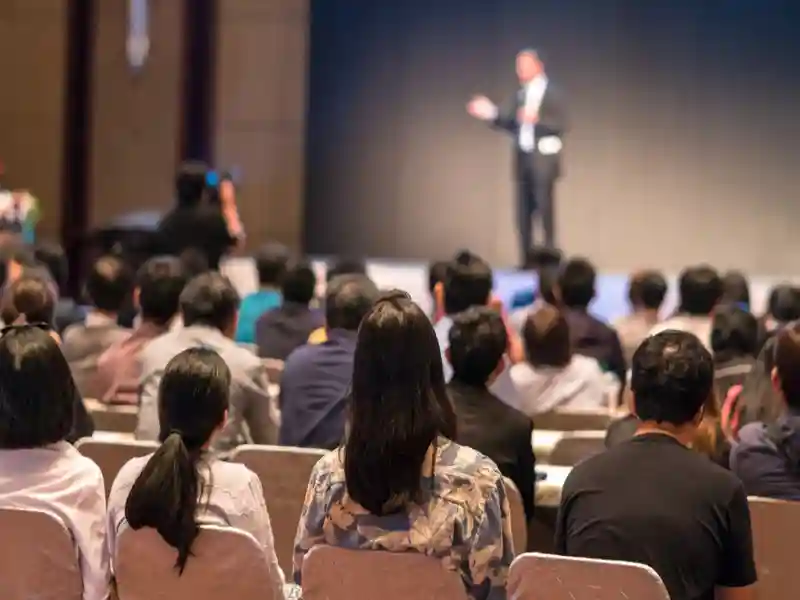
New business requirements, new innovations, and new International HR models make it essential for HR to be in strategic harmony with the business. No longer a burdensome cost: HR has a new role to play, the new structure for future HR departments will mean a massive rethink of how HR contributes to the business and how its value is measured.
This innovative dynamic conference will cover all the latest thinking and the new models for International HR.
At the end of this conference the participants will be able to:
See the new three-tier HR framework and understand the structural changes needed.
Use the new HR maturity model to measure the existing positions and develop strategies for the future.
Understand and use strategic models and implementation processes to deliver future based results (this includes a new complete end to end strategic model).
Use the organizational maturity model questionnaire to plot the current position of their organization.
Understand and be able to use a corporate culture program to change organizational culture.
Use the new MMM motivational model for re-energizing the organization.
Learn how existing appraisal systems can be changed to produce measurable performance and competency results.
Understand and be able to use creative methods for improving HR performance.
New approaches to Pay and benefits.
Explore knowledge management and the role of emotional intelligence for tomorrow's organization.
Create added value - beyond key indicators.
HR Managers
Senior managers
Professionals who are committed to developing their leadership and business knowledge to position their organizations to navigate uncertainty and disruption.
Engaged leaders who are invested in elevating their knowledge and organizational impact.
Emerging leaders who want to up-level their career trajectory and master business essentials.
Introductions.
Global Change.
Impact of technology on future businesses - case study.
Need to change organizational structures - Video FACE.
How changing internal and external customer needs will affect all current HR concepts - Video.
Where are you now? The HR change model - questionnaire and discussion.
Day one review.
The four strategic models - how they work - case studies.
Strategic models for use within the organization, incorporating the LAND model - Video and organizational tool for measurement (questionnaire).
Creativity and innovation - their role in strategic thinking - exercises and video.
End of day review.
How strategy is translated into business plans.
Use of the 6 S model to produce plans that can be measured.
Creating HR quality plans - how to do it - practical exercises.
Delivering measurable business benefits.
No plan - no results - case study and Video.
End of day review.
Process re-engineering HR activities - exercise and video.
The three-tier model for HR - benefits to the business.
Managing and valuing Human Capital.
Developing and measuring Competency and Performance.
Use of Corporate culture - how to design a corporate culture template - practical case study and exercise.
The changing function of recruitment, psychometric testing, and Personality questionnaires.
End of day review.
Understanding rightsizing the organization - an ongoing process.
How pay and conditions can dramatically improve productivity - at no extra cost to the organization.
A new look at performance appraisal -ensuring year on year improvements in competency and performance.
How a new motivation model “MMM” can change measurable results.
Corporate communications - a new role for HR?
Managing trends; knowledge management, home working, predictive forecasting.
Being an operations administrator and planning who does what and when within a team requires a high level of ability and is fraught with difficulties. This training program in administrative operations and coordination will offer a special chance to grasp the abilities needed for this position, from the macro to the micro. From the technical talents needed to plan and implement procedures, to the more delicate abilities of speaking clearly and confidently with others, to the leadership and management capacities to think broadly and organize.
In this course, participants will be sensitized to the recent trends in public relations and develop their skills to carry out contemporary roles and practice of public relations and to identify the structure of the optimal organization and responsibilities of employees of the public relations departments, planning and follow-up work in public relations departments, develop and motivate the performance of employees, planning and organizing a ceremony of reception and bidding Visitors and VIPs, develop effective communication with customers and employees, how to arrange concerts, seminars, and banquets.
This program is concerned with the development of the skills and abilities of the Public Relations Manager. Therefore, the program offers a set of training and concepts necessary to build constructive relationships inside and outside the institution based on scientific bases in building this relationship and planning it and study the extent of the institution's place in the hearts of employees on the one hand and the surrounding community. The program is concerned with providing the man of communication skills and effective communication with others as one of the elements of building relationships and what are the means to improve the internal structure of the institution and the network of formal and informal relations.
The program also provides the trainee with the skills required to make presentations and to negotiate partnerships with relevant institutions through meetings, presentations and cooperation, and partnership agreements.
This course is designed for participants to introduce to key issues and themes in international development.
Participants will explore and engage in academic debates and discussions around a set of key factors that shape, influence, and constrain the development and prosperity of nations.
The course will explore a number of key themes in international development, including how questions of gender and generation shape the impact of poverty; how processes of globalization, migration, and violent conflict impact development; and how development and the environment are linked.
It also considers what exactly we mean by poverty, and how different ways of understanding poverty feed into different approaches to tackling it.
It will also consider development institutions: what are the key institutions in the architecture of international development? How do they differ, and what are the challenges and opportunities they present? Through this module, participants will gain a solid background in the various factors which shape current approaches to and debates on international development.
By introducing participants to a range of problems in economic development, we will look to analyze how economic theory and models can explain the lack of development in some nations. We will apply such theory to real-world economies to understand the nature of the problems they face and how effective policies can be in tackling the problems.
Increasingly, it is being recognized that the trend towards equal opportunities for women is giving women the chance to take more responsibility and make more contributions to the success of their organization. However, in many cases, there is a need to develop the skills and confidence necessary to maximize potential as individuals and as employees. This course is designed to do just that - to equip women with the skills, knowledge, and confidence to succeed in what has traditionally been a male-dominated society. The course will involve experiencing personal development and practicing the new skills using ten competencies which are the key to success in a position of responsibility.
One of the major keys to success in the business world is being able to apply “discipline” to your life and actions! This is the key to developing personal effectiveness and professional excellence.