

This training course helps participants to advance their career in medical administration. They'll gain a firm grasp of medical and scientific terms used day-to-day in hospitals and medical settings. In this course, participants will gain the skills to communicate effectively and manage staff, processes and healthcare resources at all levels.

This program covers all the key concepts of industrial hygiene, including anticipating, recognizing, evaluating, communicating, and control of workplace conditions that have the potential to cause occupational disease and illness. The program is aimed at individuals and managers who wish to learn more about or enhance their knowledge, industrial (occupational) hygiene.

Health policy in much of the developed world is concerned with assessing and improving the quality of health care. But how are quality improvements to be wrought in such a complex system as health care? A recent issue of Quality in Health Care was devoted to considerations of organizational change in health care, calling it “the key to quality improvement”.In discussing how such change can be managed, and articles that cultural change needs to be wrought alongside structural reorganization and systems reform to bring about “a culture in which excellence can flourish”. A review of policy changes over the past two decades shows that these appeals for cultural change are not new but have appeared in various guises. However, talk of “culture” and “culture change” begs some difficult questions about the nature of the underlying substrate to which change programs are applied.
Health and Safety in the Workplace provide those in managerial and supervisory positions with appropriate knowledge and understanding of the issues involved. You will learn how to reduce costs and improve profits with effective safety management.

The term, lean thinking originated from the Toyota Production System. This term was first used by Krafcik and popularized by Womack and Jones, in 1992 with the publication of the book "the machine that changed the world".

In the last four decades, hostage situations have rapidly increased in the world. Due to the threat of terrorism and other social problems. The goals of hostage-takers are.To achieve certain political, criminal, and/or social benefits through hostage situations. It is not only a police problem but also a governmental problem. Police apply either negotiation or tactical intervention in hostage situations to recover hostages without bloodshed or loss of life. Success in this endeavor is based on effective negotiation. The purposes of this study are to analyze the major actors and their roles in hostage situations, to identify effective negotiation strategies and tools, and to provide some future recommendations for governments, police agencies, and researchers for peaceful resolutions in hostage situations.
This course seeks to address the quantity, complexity, and diversity of the developments in the wastewater treatment profession, particularly in developing countries where access is not readily available to advanced-level courses in wastewater treatment.
Global healthcare leaders must have expertise in leadership management, healthcare finance, and human resource management in order to maintain excellence in service and patient care. The Strategic Healthcare Management course aims to ensure that healthcare leaders have access to the world’s leading practices in complex organizational management and healthcare leadership.
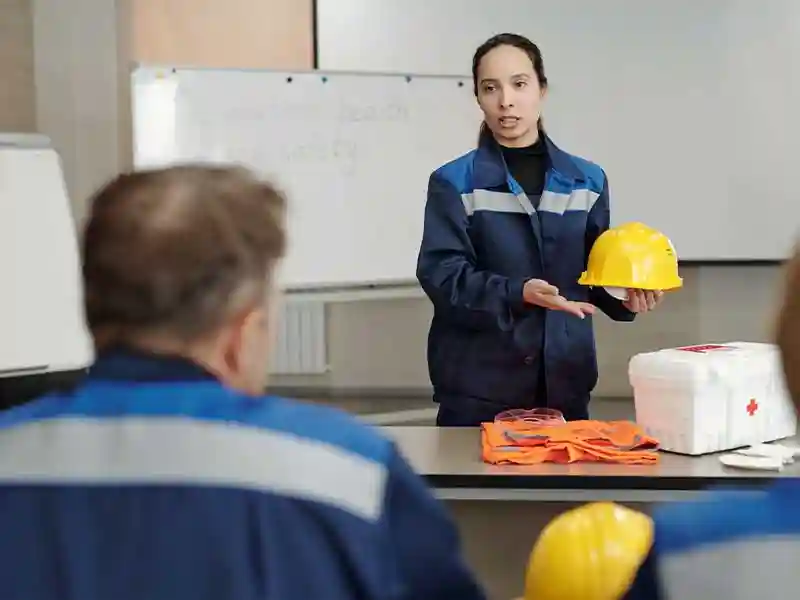
This course provides an understanding of the structure, contents, and applicability of the Occupational Safety and Health Administration (OSHA) standards.